
Chances are good that most of us have been on the receiving end of a scam. Whether it’s a “past due invoice” replicated to look exactly like a monthly bill, or a suspicious text message linking to a payment portal, there’s no question that scammers have become increasingly sophisticated in their methods.
If you’ve fallen into a scammer’s carefully laid trap, Somerville-Cambridge Elder Services’ Technology Access Program (TAP) team wants you to know that you’re not alone.
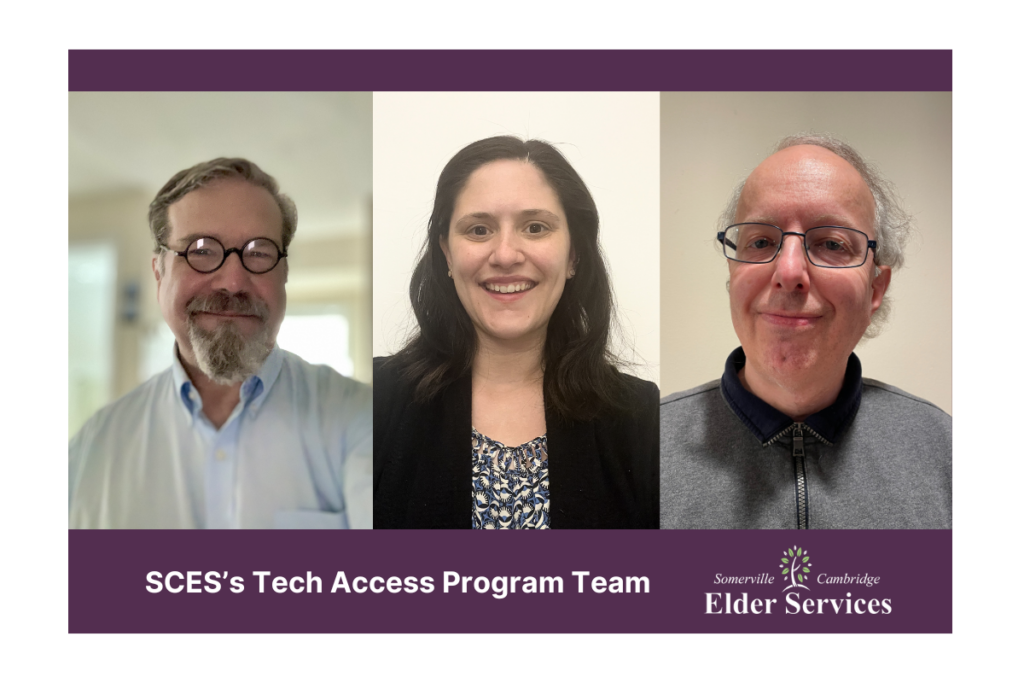
“Our program teaches people how to work with technology. We see it as our responsibility to offer information about how to spot and avoid scams,” said TAP Manager Colin Barr. “We’re trying to protect participants in our programs. We do that by spreading awareness through workshops, individual help sessions, handouts, and conversations.”
The TAP team reports that they’ve seen an uptick in concerns around scam activity while meeting with clients. They’ve begun to hold scam prevention workshops in recent months in addition to their general informational workshops and one-on-one help sessions.
TAP team members offer tips and tricks in their programming to help participants catch even the savviest of scammers. They warn that the following are common scam tip-offs:
- If the message text contains a call asking for money or personal information right away
- If the sender’s e-mail address doesn’t match the display name, or if a public or governmental entity is e-mailing from a ‘.com’ address
- If the text has any typos
- If you’re online dating, be cautious if your date always uses the same photo when contacting you and/or creates excuses for not meeting in-person
- During any sort of local or national emergency, scamming activity heightens. Stay alert!
They add that the following preventative tips can go a long way in helping consumers avoid scams:
- As a best practice, donate to any charity or organization directly through their website rather than their social media page
- You can always call a vendor through their verified phone number to determine whether something sent from them is a scam
- Note that your bank will never ask for your account numbers or social security number over the phone
Technology Access Coordinator Hannah Perry stresses the importance of reaching out to others for help.
“If someone isn’t sure if something is coming from a scammer, I recommend that they step away and talk to someone else about it. Scammers thrive when they catch their victims alone,” she said. “A lot of times, someone’s instinct that something might be a scam is correct.”
In the event that you or a loved one does fall for a scam, there are actions you can take. The TAP team recommends reaching out to the AARP, the Federal Trade Commission, or the local police to report the scammers. They also offer that many banks and businesses are insured against this type of hacking activity, so scam victims should always try to get their money back.
“The more we report and give out information on scammers, the more likely it is that they’ll get caught,” said Technology Access Coordinator Paul Angelosanto. “We need to bring more awareness to this issue.”
Part of the TAP team’s work is to try to change the narrative around scams and let program participants know that it’s not their fault if they get scammed. Reducing stigma and embarrassment will open up critical conversations and encourage people to report scammer activity, they say.
Colin, Hannah and Paul are always available to chat about scams, how to spot them, and what to do if you fall for one! You can give them a call at 617-628-2601 ext. 1007, and be sure to check out their community calendar here for a full list of upcoming TAP events and programs.
Somerville-Cambridge Elder Services’ Technology Access Program was funded by the Massachusetts Broadband Institute at the MassTech Collaborative under the Digital Equity Partnership Program. Funding was provided by Massachusetts ARPA State Fiscal Recovery Funds.